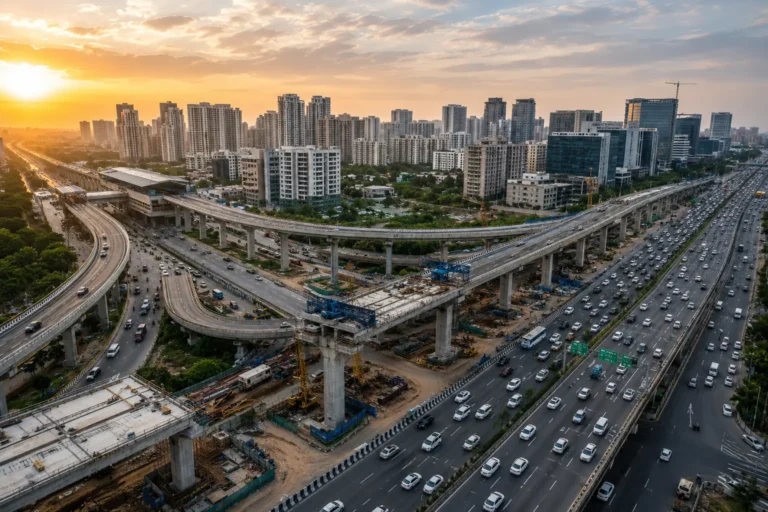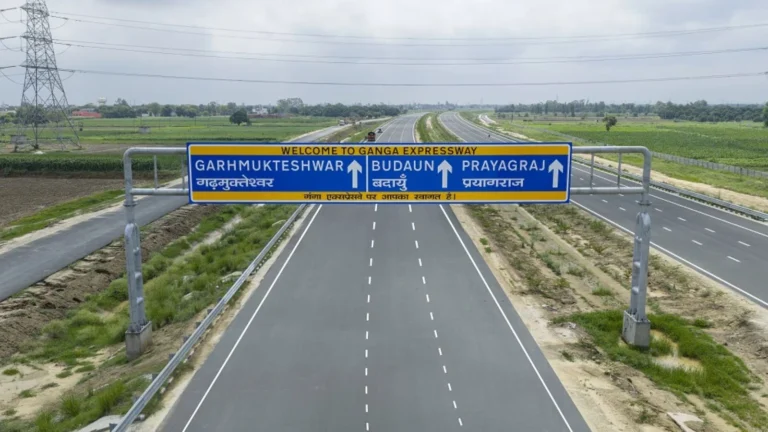
India's infrastructure landscape is changing fast, and at the heart of this transformation is the Ganga Expressway — one of the most ambitious road projects the country has ever seen. Stretching 594 km from Meerut to Prayagraj, the Ganga Expressway is a 6-lane greenfield corridor, expandable to 8 lanes, running broadly parallel to the Ganges …
Ganga Expressway: So Far the Longest Highway in Uttar Pradesh
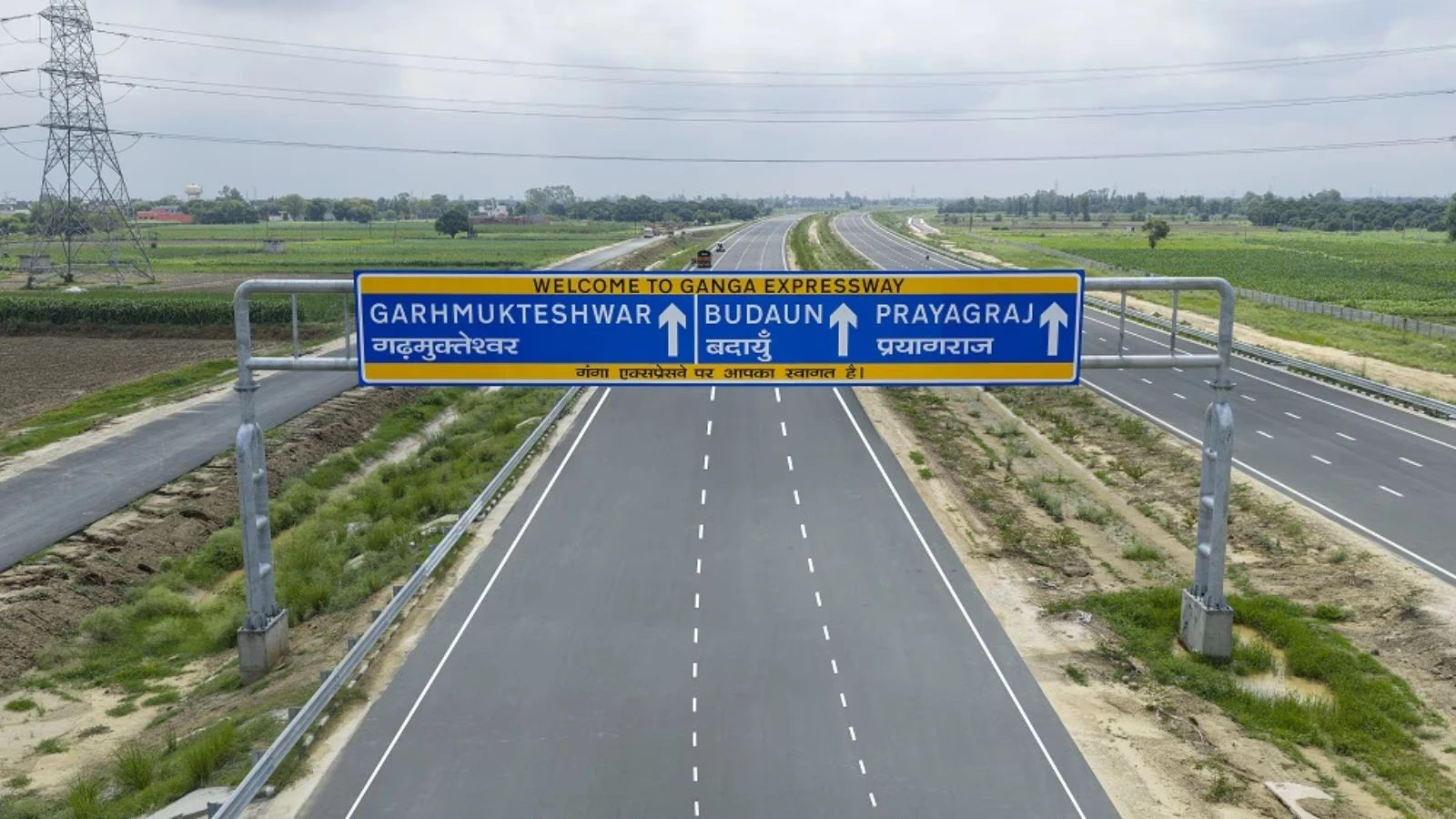
India’s infrastructure landscape is changing fast, and at the heart of this transformation is the Ganga Expressway — one of the most ambitious road projects the country has ever seen. Stretching 594 km from Meerut to Prayagraj, the Ganga Expressway is a 6-lane greenfield corridor, expandable to 8 lanes, running broadly parallel to the Ganges River across Uttar Pradesh. When fully complete, it will be among the longest expressways in India, reshaping how millions of people live, travel, and invest.
What is the Ganga Expressway?
The Ganga Expressway is a greenfield expressway connecting the eastern and western boundaries of Uttar Pradesh. It consists of two phases: the completed Phase 1 (Meerut–Prayagraj), which is 594 km (369 miles) long, with its western end at Bijauli village in Meerut district and eastern end at Judapur Dandu village in Prayagraj district; and the under-construction Phase 2 (455 km / 283 miles), which includes two extensions—Spur 1 (Upper Ganges Canal Expressway), a 110 km route from Bulandshahr–Meerut to Haridwar in the west, and Spur 2, a 314 km Prayagraj–Ballia Expressway route in the east.
History & Background
The Ganga Expressway has a long and interesting history. The project was first proposed in 2007 by Uttar Pradesh Chief Minister Mayawati as a Greater Noida–Ballia Expressway, but remained stalled for years. It was revived in 2019 by Chief Minister Yogi Adityanath, who allocated an initial budget of ₹2,000 crore for Phase 1 construction in 2020.
The total expected project cost in 2021 was ₹37,350 crore, including land acquisition costs of around ₹9,500 crore. Environmental clearance was received in November 2021, and Prime Minister Narendra Modi laid the foundation stone in Shahjahanpur on 18 December 2021. Physical construction began in April 2022.
Which Districts Does it Connect?
The expressway connects 12 key districts — Meerut, Hapur, Bulandshahr, Amroha, Sambhal, Badaun, Shahjahanpur, Hardoi, Unnao, Rae Bareli, Pratapgarh and Prayagraj, and is designed as a six-lane highway, expandable to eight lanes, with a top speed of 120 kmph.
This means the expressway passes through western UP’s manufacturing belt, central UP’s agricultural heartland, and eastern UP’s education and pilgrimage economy, creating a truly integrated corridor.
Who Built It?
UPEIDA divided the Phase 1 construction work into 12 packages under the Design-Build-Finance-Operate-Transfer (DBFOT) model. The key contractors are IRB Infrastructure for Package 1 (Meerut–Hapur) and Adani Enterprises for Packages 4 and 5 covering the Budaun–Shahjahanpur stretch.
Gautam Adani himself acknowledged the project’s significance, describing it as a corridor that would nurture millions, drawing a parallel with the sacred Ganga river it runs alongside.
Construction Progress
As of early 2026, Phase 1 had achieved 100% earthwork, 100% GSB, 100% WMM, 100% DBM in the main carriageway, and all 1,498 structures were completed, with overall progress at about 96%. Only lane marking, toll booth construction and road signage work remains in some sections.
The expressway was officially inaugurated by Prime Minister Narendra Modi, marking a historic milestone for Uttar Pradesh’s infrastructure ambitions.
A Unique Feature: Emergency Airstrip
One of the most remarkable features of the Ganga Expressway is its dual-use design. Sections of the expressway have been constructed to operate as airstrips for the Indian Military. The Indian Air Force conducted landing and take-off drills on 2 May 2025 from a 3.5 km Emergency Landing Facility near Shahjahanpur. Aircraft included Su-30MKI, Mirage 2000, MiG-29, Jaguar, C-130J Super Hercules, An-32, and Mi-17 V5 helicopters.
This makes the Ganga Expressway not just a civilian infrastructure asset but also a strategic defence asset for the country.
Phase 2: Expanding the Network
Phase 2 was approved in January 2025, paving the way for pre-construction DPR preparation. Spur-1 (Meerut–Haridwar) received a ₹50 crore budget allocation in February 2025 for pre-construction activities. At Haridwar, it will connect to the Char Dham Highway and Char Dham Railway. Spur-2 (Prayagraj–Ballia) remains in pre-construction, with surveys completed by UPEIDA in 2024.
Once complete, the full 999 km network will link Haridwar in the north to Ballia in the east, passing through almost every major city in Uttar Pradesh.
Impact on Real Estate & Property Markets
Perhaps the most exciting aspect of the Ganga Expressway for investors and homebuyers is its transformative impact on real estate.
Developers are projecting a 20–40% rise in property prices over the next few years along the expressway corridor. Real estate experts say the project marks a structural shift from city-centric growth to a corridor-driven development model, opening up Tier II and III cities as new investment hubs.
Industrial & Logistics Growth
The Ganga Expressway is not just a road — it is an economic corridor.
The area along the expressway is being developed as an industrial corridor, with new industries coming up around Meerut, Badaun, Kanpur, Varanasi and Prayagraj. Government plans include setting up pharma parks, textile parks, and IT parks along the route. In 2023, the Uttar Pradesh government acquired land to set up an industrial city in Meerut, adjacent to entry and exit points of the expressway.
Warehousing and logistics projects are likely to take off within the first three years, followed by residential and commercial development in subsequent years. Districts such as Hapur, Bulandshahr and Hardoi are witnessing rising demand for logistics and industrial development, while Unnao and Rae Bareli are benefiting from improved connectivity.
Key Interchanges & Connectivity
The expressway integrates with several major national highways and expressways, including:
-
- Delhi–Meerut Expressway at the western entry point
-
- Agra–Lucknow Expressway (double trumpet interchange)
-
- NH-27 (Kanpur–Lucknow)
-
- NH-30 (Raebareli–Unchahar)
-
- Yamuna Expressway via spur to Noida International Airport (Jewar)
This makes the Ganga Expressway a central node in UP’s entire expressway network, dramatically improving inter-city and inter-state connectivity.
UP’s Bigger Expressway Vision
The Ganga Expressway is part of a much larger plan. Uttar Pradesh is building 8 new expressways to further improve connectivity across the state, positioning itself as the infrastructure capital of North India. This includes connections to neighbouring states, pilgrimage routes, and industrial zones, making UP one of the most well-connected states in the country.
Conclusion
The Ganga Expressway is far more than a road. It is a 594 km engine of growth that is redefining how Uttar Pradesh connects, competes, and develops. From cutting travel time between Meerut and Prayagraj dramatically, to creating new industrial hubs, boosting real estate values, and even serving as an emergency military airstrip, this expressway is a once-in-a-generation infrastructure achievement.
Overall, the Ganga Expressway is expected to create a multi-layered economic corridor, combining industrial expansion, logistics growth and residential demand. As infrastructure-led development gains momentum, the project is likely to position Uttar Pradesh as a key real estate and investment destination in North India.
For investors, businesses, homebuyers and travellers alike, the Ganga Expressway is the corridor that cannot be ignored.

Vikas Rao
I am Vikas Rao, a real estate professional with over 10 years of experience in the property market across Gurugram and Delhi NCR. Throughout my career, I have helped hundreds of homebuyers, investors, and businesses find the right property at the right value. My approach is built on market expertise, honest advice, and a genuine commitment to making every property journey smooth, informed, and rewarding.